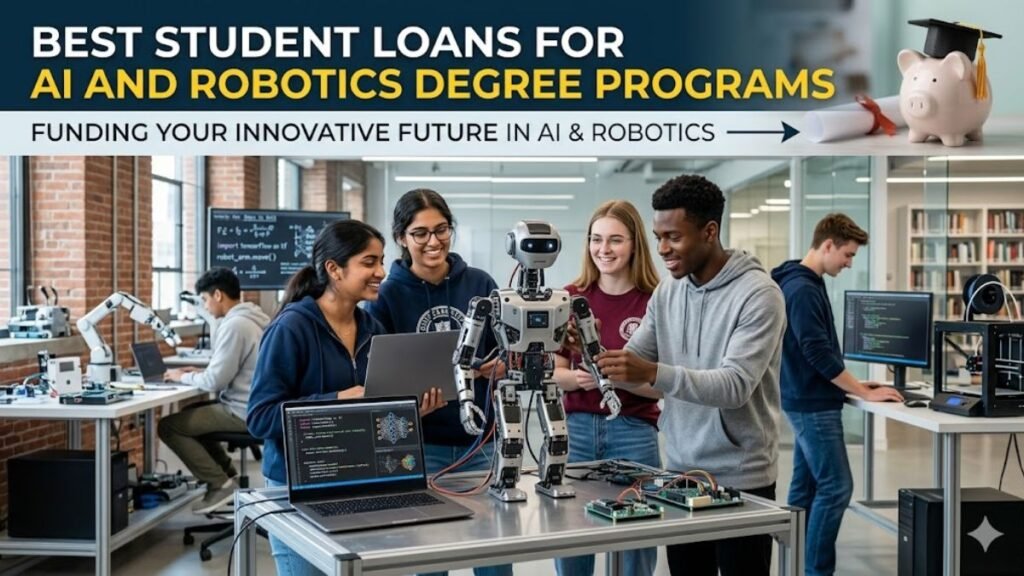
The global demand for Artificial Intelligence (AI) and robotics specialists is skyrocketing. From self-driving vehicle simulations to automated healthcare diagnostics, the automation landscape is expanding rapidly. Consequently, pursuing an advanced degree (like a B.Tech, M.S., or Ph.D.) in AI and Robotics is an incredibly lucrative career move.
However, cutting-edge education comes with a premium price tag. Specialized lab equipment, powerful computational resources, and top-tier faculty make these STEM programs expensive. For most students, securing the right financial support is the first major step toward building the future.
This comprehensive guide breaks down the best student loan options for AI and robotics degree programs, detailing what to look for in a lender and how to strategically fund your high-tech career.
Why Funding an AI & Robotics Degree Is Different
Lenders view academic majors through the lens of risk and return on investment (ROI). Fortunately for AI and robotics students, the market works in your favor.
- High Earning Potential: Graduates regularly step into high-paying roles such as Machine Learning Engineers, Robotics Software Developers, and Data Scientists.
- Lender Confidence: Because of the strong employment outlook, specialized fintech lenders and traditional banks are increasingly willing to offer competitive interest rates and flexible terms to advanced STEM students—even without an extensive credit history.
Top Student Loan Options for AI & Robotics Students
When looking for an education loan, you will generally choose between private fintech lenders, traditional commercial banks, and international student loan specialists if you plan to study abroad.
1. AI-Driven Fintech Lenders (Best for Faster Approvals & Custom Terms)
Fintech platforms have revolutionized the student loan market by using machine learning algorithms to assess creditworthiness. Instead of looking strictly at past credit scores or demanding heavy collateral, these platforms evaluate your future earning potential based on your university, major, and program track.
- Zest AI & US-Based Private Lenders: In the United States, private lenders powered by advanced underwriting engines assess applicants holistically. This makes it easier for deserving students who lack a deep credit history to secure favorable rates.
- GradRight, Credila, & InCred (India-Focused): For students operating out of South Asia or planning to study abroad from India, AI-driven aggregators like GradRight allow you to bid your profile to multiple banks simultaneously. This transparency ensures you secure the lowest possible interest rates for expensive engineering tracks.
2. Traditional Commercial Banks (Best for Low Interest Rates & Secured Loans)
If you or your co-signer possess collateral (such as property or fixed deposits), traditional institutional banks often provide the lowest interest rates.
- State-Backed & National Banks: Banks like State Bank of India (SBI) or ICICI Bank offer dedicated premium packages for top-tier technology institutes (like the IITs, IISc, or global Ivy Leagues).
- Drastic Reduction in Processing Times: Thanks to integrated digital workflows, top commercial banks have reduced their loan approval times significantly by utilizing automated KYC and bank statement parsing tools.
3. International Student Loan Specialists (Best for Studying Abroad Without a Co-Signer)
If you are relocating to the US, Europe, or the UK for an advanced degree in Robotics or Machine Learning, finding a domestic co-signer can be difficult.
- MPOWER Financing & Prodigy Finance: These lenders specialize in funding international STEM students. They do not require a co-signer or collateral. Instead, their assessment models rely heavily on the projected post-graduation salary of an AI specialist or roboticist.
Key Features to Compare Before Choosing a Loan
| Feature | What to Look For | Why It Matters for AI/Robotics |
| Interest Rate Type | Fixed vs. Variable | Fixed rates offer predictable payments; variable rates can start lower but fluctuate with the market. |
| Grace Period | 6 to 12 months post-graduation | Gives you ample time to complete intensive technical interviews and land a top-tier tech job before EMIs kick in. |
| Collateral Requirement | Unsecured (No Collateral) vs. Secured | High-ROI programs like AI often qualify for large unsecured loans from modern fintechs. |
| Moratorium Period | Interest-only or zero-payment during study | Minimizes financial stress while you are balancing complex coding and hardware projects. |
How to Optimize Your Student Loan Strategy
Leverage Your Future Salary
When negotiating with private lenders or fintech platforms, highlight the projected placement statistics of your specific department. An M.S. in Robotics from a well-regarded university carries massive weight; make sure the underwriting system acknowledges the specific value of your degree rather than treating it like a generalized arts or humanities program.
Use AI Tools to Your Advantage
Just as AI is changing the tech industry, it is also changing personal finance. Use AI-driven financial platforms and budgeting apps to run predictive repayment simulations. These tools help you analyze how factoring in income-driven repayment options, varying interest rates, or making accelerated micro-payments during your grace period can drastically cut down your overall debt burden.
Maximize Scholarships and Assistantships First
Before signing any loan agreement, exhaust your institutional funding options. Many robotics labs offer Graduate Research Assistantships (RAs) or Teaching Assistantships (TAs) that include full tuition waivers and a monthly stipend. Use a student loan to bridge the remaining gap rather than funding the entire tuition fee blindly.
Final Thoughts
Investing in an AI and Robotics degree is an investment in the foundational architecture of tomorrow’s economy. While the upfront educational expenses can seem daunting, the modern lending ecosystem offers more personalized, tech-forward, and accessible financing structures than ever before.
By comparing traditional banks against predictive fintech lenders, you can secure a loan package that minimizes your financial stress, allowing you to focus entirely on building the next generation of intelligent systems.
An education loan is a major milestone, and navigating the application process requires careful planning. This overview highlights how financial institutions evaluate applications and how specialized platforms streamline the approval process:
This presentation details how modern educational platforms and organizations utilize digital tools and automated systems to coach students through the financial aid and loan application process efficiently.